Granite vs Quartz vs
Marble vs Quartzite
The complete guide to choosing the right countertop material for your home or business. Written by fabricators with 15+ years of hands-on experience in South Florida.
Making the Right Choice
Choosing the right countertop material is one of the most important decisions you will make during a kitchen or bathroom remodel. It defines the aesthetic of your space, dictates your cleaning routine, and impacts your budget. With so much conflicting information online, the debate of granite vs quartz or granite vs marble can quickly become overwhelming.
At Marcos Stone Works, we aren’t just salespeople; we are direct fabricators. Because we cut, polish, and install all four of these materials every single day, we have a unique, hands-on perspective to help you decide which countertop is best for kitchen islands, bathroom vanities, or outdoor living spaces.
This comprehensive guide breaks down the ultimate showdown—including the common confusion between quartz vs quartzite—comparing them across the categories that matter most: durability, maintenance, heat resistance, appearance, and overall value.
Countertop Material Comparison Chart
A quick side-by-side look at how the top four stone surfaces stack up against each other.
| Material | Durability | Maintenance | Heat Resistance | Stain Resistance | UV Resistance (Outdoor) | Price Range | Best For |
|---|---|---|---|---|---|---|---|
| Granite | Very High | Low (seal yearly) | Excellent | Good (when sealed) | Excellent | $$ – $$$$ | Kitchens, outdoor kitchens, high-traffic areas |
| Quartz | High | Very Low (no sealing) | Moderate (avoid hot pans) | Excellent (non-porous) | Poor (UV damages resin) | $$ – $$$ | Kitchens, bathrooms, low-maintenance homes |
| Marble | Moderate | High (seal every 6-12 mos) | Good | Low (porous, etches with acid) | Poor | $$$ – $$$$$ | Bathrooms, fireplace surrounds, baking stations |
| Quartzite | Highest | Low (seal yearly) | Excellent | Good (when sealed) | Excellent | $$$ – $$$$ | Kitchens, outdoor kitchens, bathrooms, fireplaces |
Granite Countertops
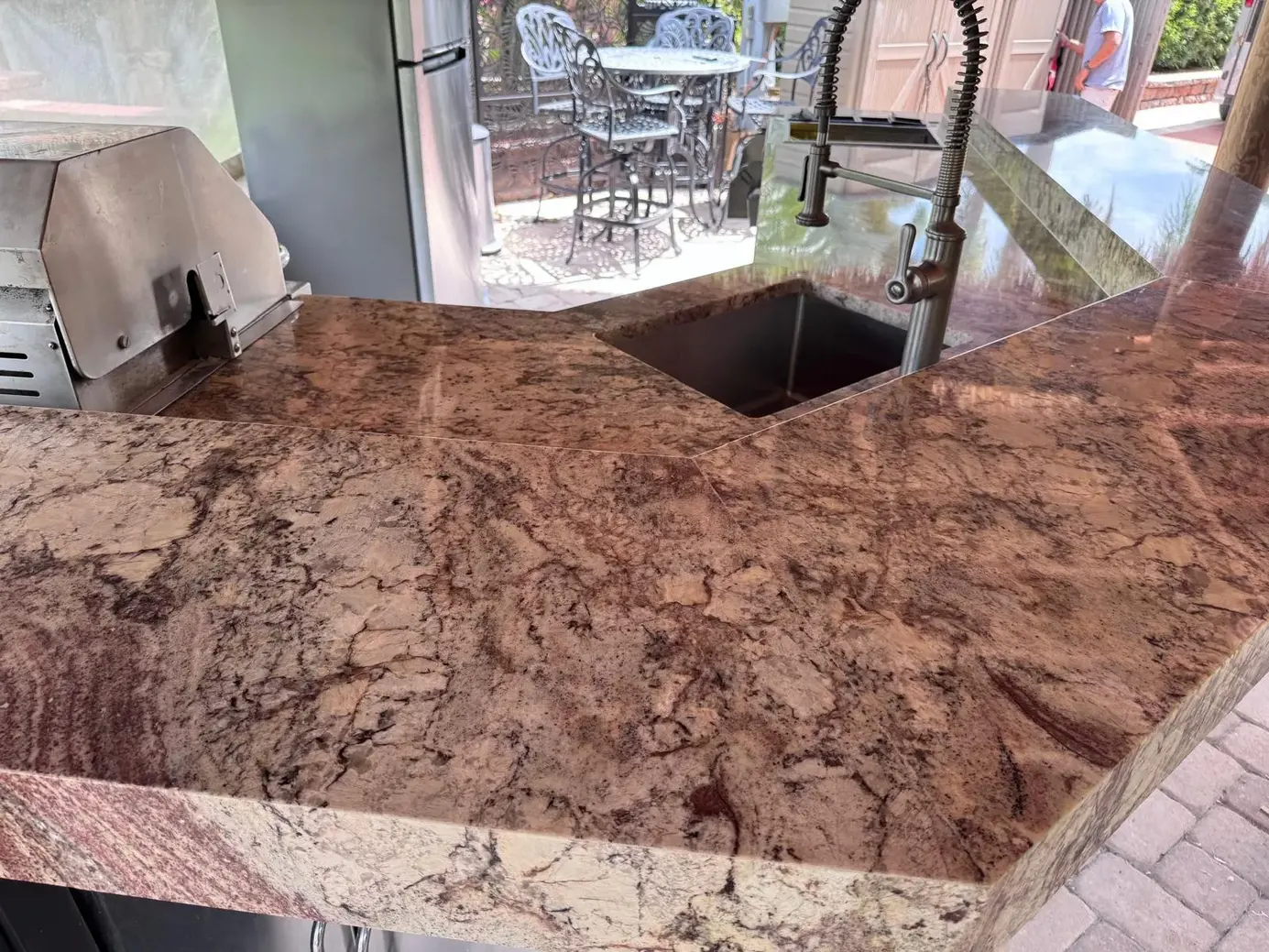
Granite is a 100% natural igneous rock forged deep within the earth’s crust under extreme heat and pressure. Its main strengths lie in its phenomenal heat resistance and scratch resistance. Because no two slabs are exactly alike, granite offers uniquely beautiful, sweeping patterns and crystalline structures. It is also completely UV resistant, making it one of the few materials genuinely safe for South Florida outdoor kitchens.
Its primary weakness is its porosity; to prevent stains from oils or dark liquids, granite must be sealed approximately once a year (a simple 15-minute wipe-on process).
Who should choose Granite?
Ideal for families who cook heavily, outdoor kitchen enthusiasts, and homeowners who deeply value having a one-of-a-kind piece of natural art in their home.
Quartz Countertops
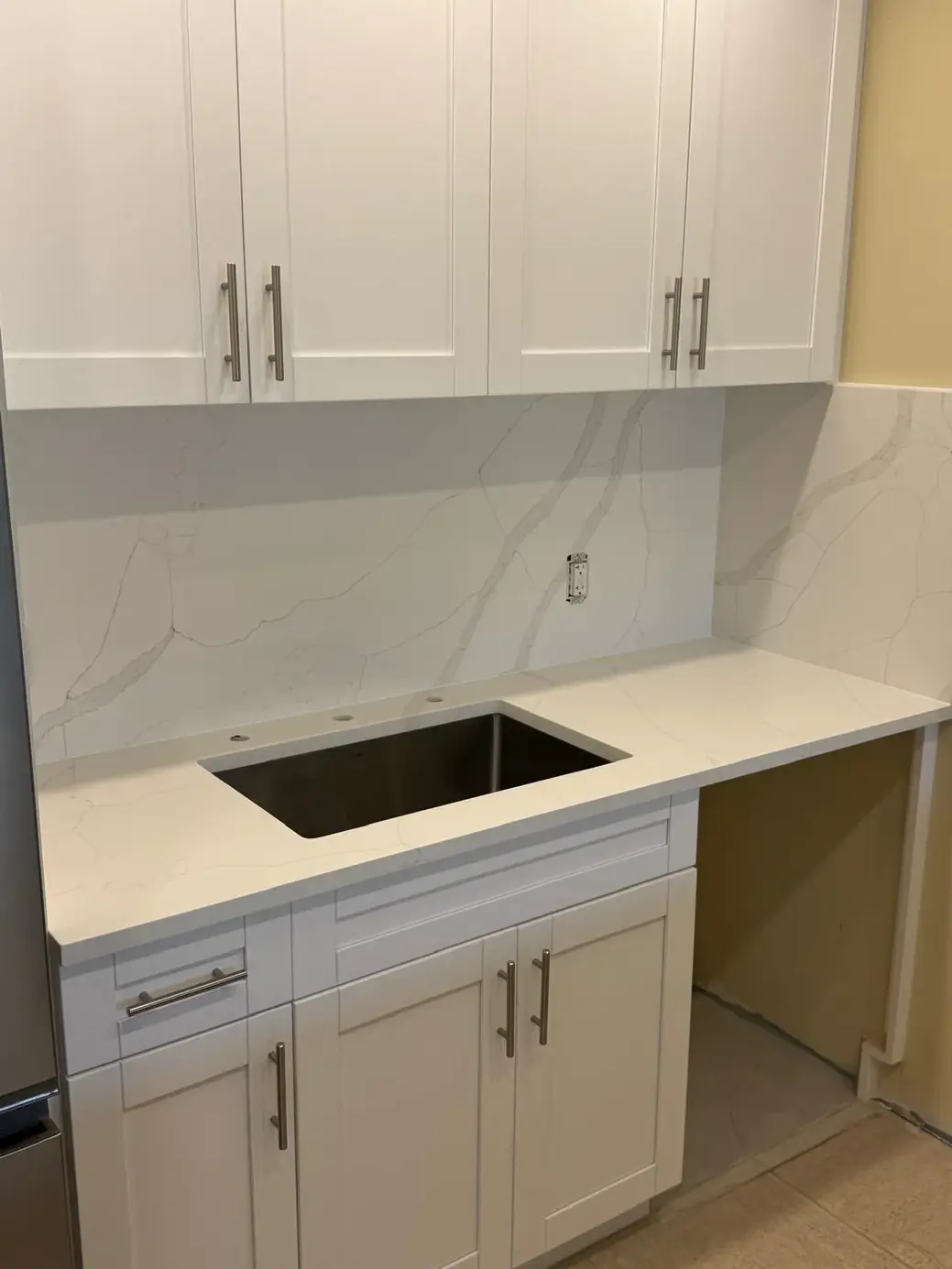
Unlike natural stone, quartz is an “engineered” surface. It is manufactured by combining roughly 90-95% crushed natural quartz with 5-10% polymer resins and pigments. This engineering yields its greatest strength: it is entirely non-porous. Quartz is highly stain-resistant, requires absolute zero maintenance (no sealing ever), and offers perfectly consistent colors and patterns.
However, the resins that make it non-porous also create its weaknesses. Quartz cannot withstand extreme direct heat (setting a hot pan directly on it can scorch the resin), and it is not suitable for outdoor use because UV rays will cause the resins to yellow and degrade over time.
Who should choose Quartz?
Perfect for homeowners who prioritize zero maintenance, busy households with young children, and those designing modern kitchens or bathrooms that demand a crisp, uniform aesthetic.
Marble Countertops
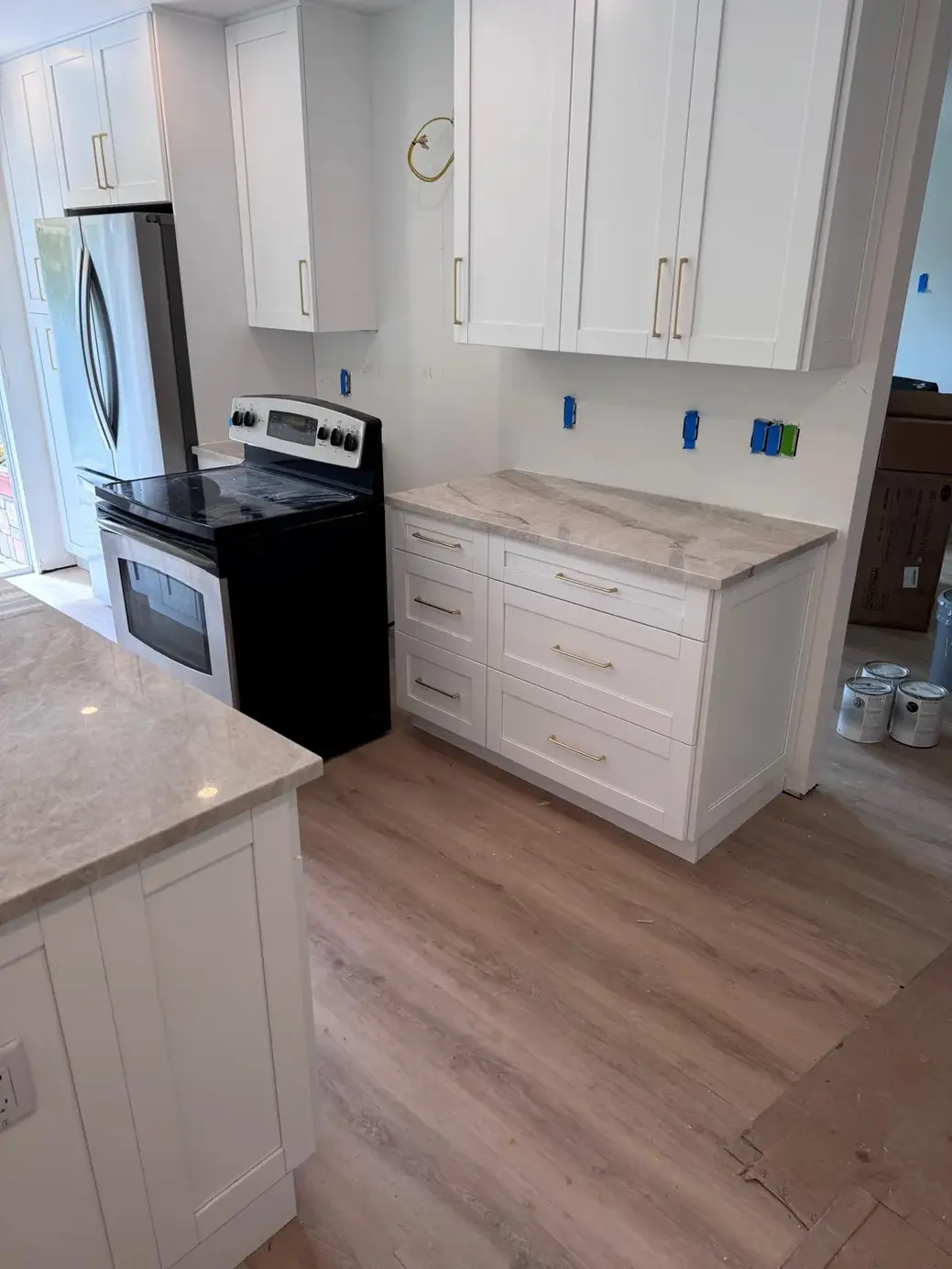
Marble is a natural metamorphic rock recognized worldwide as a symbol of luxury. Its strengths are undeniably aesthetic: it offers a timeless, bright elegance and unique veining that cannot be perfectly replicated by engineered stones. Additionally, it remains naturally cool to the touch, making it the historic favorite for baking stations and pastry chefs.
We believe in being honest with our clients: marble requires commitment. It is a highly porous and softer stone. It can stain if spills aren’t caught quickly, and more importantly, it is susceptible to “etching”—dull spots caused by acidic substances like lemon juice, wine, or tomato sauce reacting with the calcium carbonate in the stone. It demands high maintenance and frequent sealing.
Who should choose Marble?
Best for those who prioritize luxury aesthetics over strict practicality, for master bathroom vanities, stunning fireplace surrounds, or homeowners who embrace the natural “patina” a stone develops over a lifetime of use.
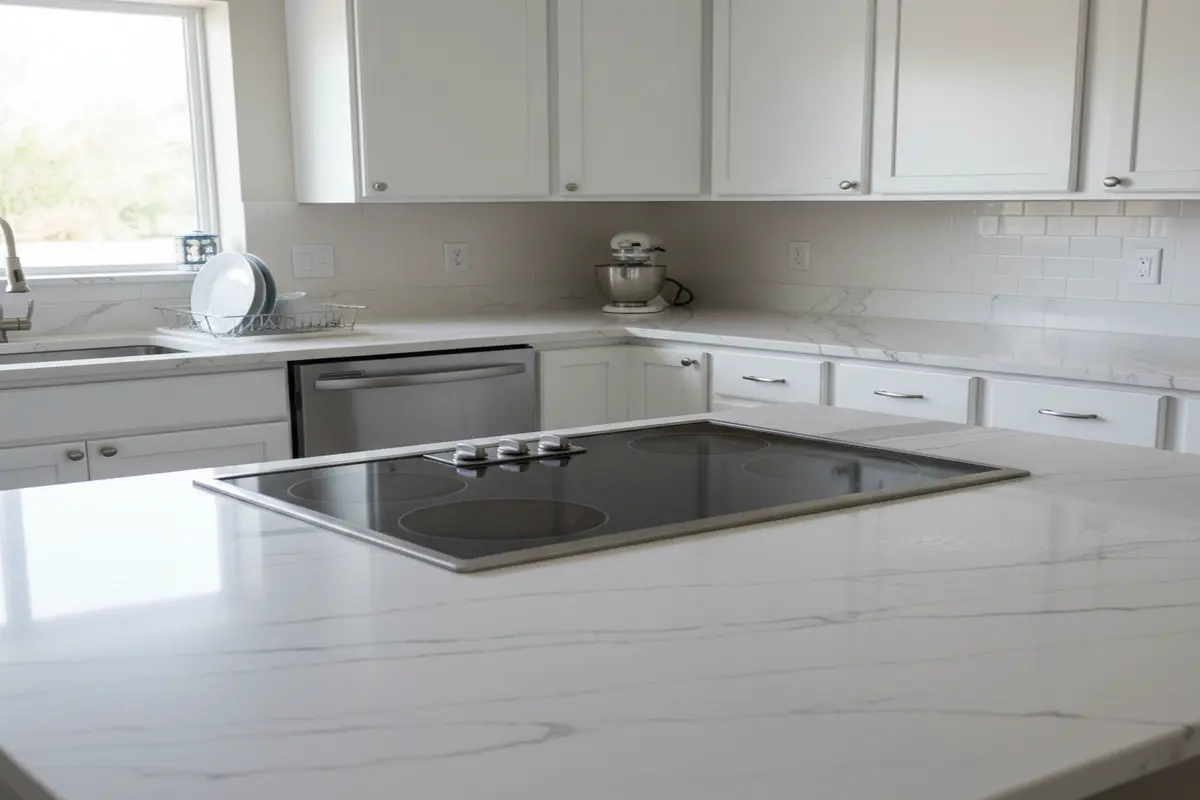
Quartzite Countertops
Quartzite is often considered the holy grail of natural stone countertops. Formed when sandstone is subjected to immense heat and pressure under the earth, quartzite is the hardest natural stone available for countertops—harder even than granite. Its main strength is that it frequently mimics the soft, elegant veining of marble, while possessing heat and UV resistance comparable to granite.
Its drawbacks are cost and maintenance. Because it is incredibly dense and difficult to quarry and cut, it sits at the higher end of the price spectrum. Like granite, it is a natural stone that requires annual sealing to prevent stains, and the color palette is generally limited to whites, grays, and earth tones.
Who should choose Quartzite?
The perfect choice for homeowners who want the high-end look of marble but require superior durability for heavy kitchen use. It is also an excellent, elegant choice for outdoor kitchens.
Quartz vs Quartzite: The Confusion Explained
They sound almost identical, but they are completely different materials. Here is the easiest way to understand the difference.
Quartz
- Engineered/Man-made: Manufactured in a factory using crushed stone and resins.
- Maintenance: Completely non-porous. Never needs to be sealed.
- Outdoor Use: NO. UV rays will discolor and damage the resin.
- Look: Highly uniform and consistent colors. What you see in the sample is what you get.
Quartzite
- 100% Natural: Mined directly from the earth in blocks and cut into slabs.
- Maintenance: Porous natural stone. Must be sealed annually to prevent stains.
- Outdoor Use: YES. Highly resistant to heat and UV radiation.
- Look: Unique, unrepeatable natural patterns. Often resembles high-end marble.
Which Material Is Best For…
Our top recommendations based on the specific application in your home or business.
Kitchen Countertops
Winner: Quartz or Granite. Choose Quartz for ultra-low maintenance, or Granite for natural beauty and superior heat resistance near stoves.
Explore KitchensBathroom Vanities
Winner: Marble or Quartz. Marble provides that unmatched classic luxury aesthetic, while Quartz offers zero maintenance against makeup and toothpaste spills.
Explore BathroomsOutdoor Kitchens
Winner: Granite or Quartzite. Both are 100% natural and withstand Florida’s intense UV rays and weather without fading or degrading over time.
Explore OutdoorFireplace Surrounds
Winner: Marble or Quartzite. Create a stunning focal point with the classic elegance of Marble, or the extreme durability and natural veining of Quartzite.
Explore FireplacesCommercial Spaces
Winner: Quartz or Granite. Quartz ensures brand consistency and easy cleaning for retail, while Granite provides bulletproof durability for high-traffic bars and restaurants.
Explore CommercialWhy Choose Marcos Stone Works
Fully Licensed & Insured
Peace of mind knowing your home and investment are completely protected during installation.
15+ Years Experience
Decades of hands-on fabrication experience working intimately with granite, quartz, marble, and quartzite.
Direct-to-Fabricator Pricing
Skip the middleman. By working directly with the fabricator, you secure the best possible value for your project.
Fast Turnaround
We pride ourselves on efficiency. Enjoy a swift 5-7 days turnaround time from templating to final installation.
Areas We Serve
Located in Lake Worth, we provide premium stone fabrication and installation services across Palm Beach County and South Florida.
Frequently Asked Questions
Common questions we hear from homeowners comparing stone materials.
Is granite or quartz better for kitchen countertops?
Is granite or quartz cheaper?
Is granite or quartz more durable?
What is the difference between quartz and quartzite?
Are granite countertops outdated?
Will marble countertops stain?
Can quartz countertops be used outdoors in Florida?
Which countertop material increases home value the most?
Not Sure Which Material Is Right for You? We’ll Help You Decide.
Visit our Lake Worth facility to see and touch all four materials in person, or contact us for a free, no-obligation consultation.